

Magic Mile Calculator
The Magic Mile calculator applies Jeff Galloway’s published prediction factors to your measured one-mile time trial. Enter the result to estimate mile pace, kilometer pace and finish time for five longer race distances. This page explains the factors, works through an eight-minute example and shows how to keep the method’s assumptions alongside your estimates when comparing possible race goals.
Calculate race paces from your measured mile
Enter a recent full-mile time trial. These are Jeff Galloway method estimates, with its assumptions explained below.
Your estimated race paces
| Distance | Pace / mile | Pace / km | Estimated finish |
|---|
Estimates assume appropriate distance-specific training, suitable weather and pacing. This independent calculator is not affiliated with Jeff Galloway.
How the Magic Mile calculator estimates race pace
Your full-mile trial time is adjusted by a distance-specific factor to estimate the pace per mile for a longer event.
For the 5K, the calculation adds thirty-three seconds to your trial time, while the other supported distances use multipliers with larger adjustments for the longer races. These are the factors published in Jeff Galloway’s Magic Mile explanation, where he also describes the training, pacing and conditions assumed by the method, including a race-day temperature of 60°F or cooler.
| Predicted distance | Adjustment to mile trial |
|---|---|
| 5K | Add 33 seconds for pace per mile |
| 10K | Multiply by 1.15 |
| Ten miles | Multiply by 1.175 |
| Half marathon | Multiply by 1.2 |
| Marathon | Multiply by 1.3 |

So the resulting pace is then applied across the full event distance to calculate your estimated finish. Keeping the pace unrounded through that calculation helps avoid a small error that could accumulate if an already-rounded display value were used for every mile.
Enter a measured full-mile result
The input should be the minutes and seconds from a measured mile trial that represents your current running, with each part entered in its own field.
For instance, eight minutes thirty seconds belongs in eight minutes and thirty seconds. Decimal 8.30 minutes represents a different duration, so the separate fields make the intended entry clearer. However, the accepted range of two to sixty minutes is a product input limit rather than a validation claim for every performance within it.
A full international mile is 1,609.344 meters, following the NIST conversion factor. Four 400-meter laps cover 1,600 meters. Your track’s markings identify the additional distance needed for a full mile, and the Track Pace Calculator can help calculate splits once you’ve selected a genuinely measured distance.
Read an eight-minute Magic Mile example
An 8:00 trial gives a marathon reference pace of 10:24 per mile because 480 seconds multiplied by 1.3 equals 624 seconds.
For example, the half-marathon calculation uses a factor of 1.2, giving 576 seconds or 9:36 per mile. The same input produces the reference paces below, so you can check how the selected distance and published factor relate before interpreting your estimated finish.
| Distance | Estimated pace per mile from 8:00 |
|---|---|
| 5K | 8:33 |
| 10K | 9:12 |
| Ten miles | 9:24 |
| Half marathon | 9:36 |
| Marathon | 10:24 |
Also, for the finish calculations, the tool uses 5,000 meters, 10,000 meters, ten full miles, 21.0975 kilometers and 42.195 kilometers. If you’ve already chosen a pace and simply want its constant-speed finish time, the main Mile Pace Calculator handles that separate task directly.
Compare predictions and run-walk plans
The method’s name belongs with your prediction because different approaches use different evidence and assumptions, such as a Galloway-method estimate from a mile trial or a mileage-aware marathon model. A race-to-race Riegel estimate uses its own relationship again. Recording which method produced each result makes a comparison easier to explain, especially when the numbers differ despite being entered from the same training record.
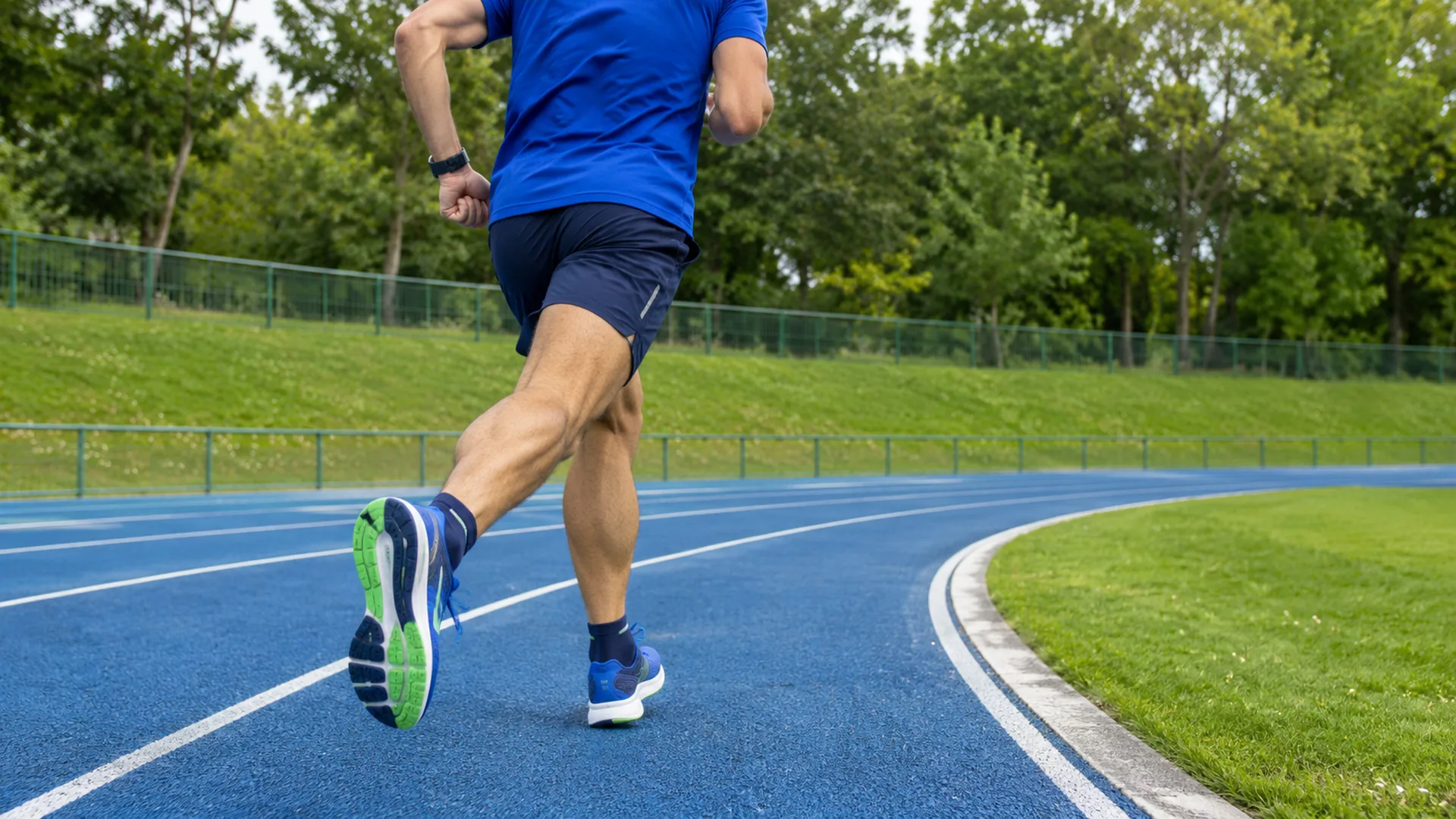
The Run-Walk Pace Calculator answers another question by calculating the average from your chosen running pace, walking pace and interval durations. For example, walking during recovery adds distance at the walking speed, while standing rest adds time without increasing distance. Those details affect the overall average and need their own inputs when you’re checking an interval strategy.
Print or download your estimates
After calculating, the result table can be printed, saved as PDF through your browser’s print dialog or downloaded as CSV for a spreadsheet.
Your printed copy includes the entered mile and distance-specific estimates, so you can recognize the calculation later even when you’ve saved several different trials. Also, changing an input clears your old result until you calculate again, which keeps a new trial time from appearing alongside an earlier set of predictions.
This is an independent implementation with no affiliation with Jeff Galloway. The estimate doesn’t assess readiness for a longer distance, so your recent training, race conditions and preparation still need to inform the goal you choose.
Frequently Asked Questions
Is this a measured fitness score?
It is a coaching prediction from your trial time, while direct measurements such as oxygen uptake or lactate testing involve different methods from these published pace adjustments.
Can I use a 1,600-meter time?
The specified input is a full mile. Keep a 1,600-meter performance labeled with its actual distance so it remains clear which measured event you completed.
Does this choose my run-walk ratio?
You can review Galloway’s published guidance and calculate a separately chosen pattern in the Run-Walk tool, while keeping this output labeled as an estimate of race pace.
Can the prediction replace a recent longer race?
Use it alongside the evidence you have. A comparable recent longer race and your wider preparation can supply context that a one-mile input leaves out.